Hardness is only one part of the story
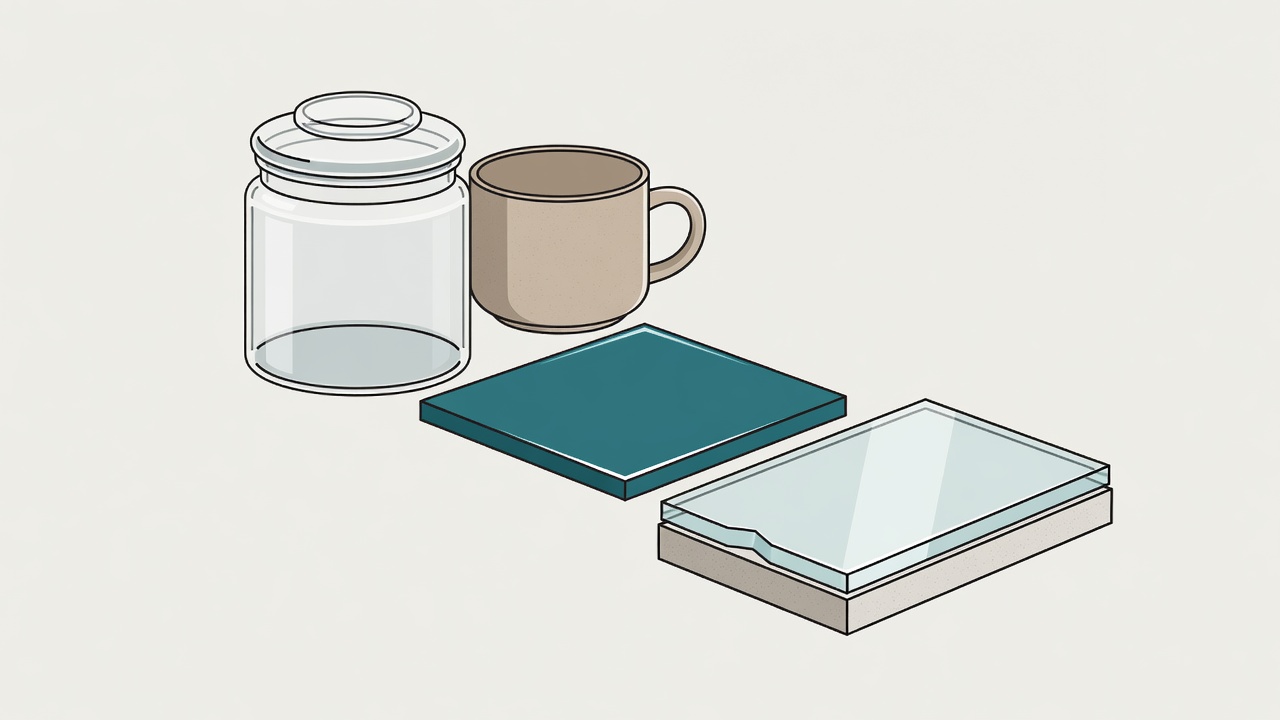
Glass and ceramics are inorganic materials made through processes involving heat. Their finished forms can resist scratching and retain shape under many everyday conditions. A glass jar makes its contents visible; a glazed ceramic surface can be straightforward to wipe; a ceramic component may tolerate heat in a purpose-designed application.
Yet a hard surface does not mean an object is immune to damage. Glass and many ceramics can fracture when an impact creates a critical flaw or concentrates force. Edges, corners, thin sections and existing chips are worth checking because local damage can change how an item behaves.
Making and finishing
Glass is shaped while hot, then cooled under controlled conditions. Some glass products receive additional treatments or have layered construction. Ceramics are shaped from mineral-based mixtures and fired; glazes can create colour, texture or a sealed surface. The precise process and product design influence its uses and limitations.
A decorative glaze or clear coating is part of the object's surface system. If it is chipped or worn, the maker's advice should guide continued use, particularly when the object contacts food, drink or high temperatures. Not every glass or ceramic item is designed for every heating method or sudden temperature change.
Care that fits the object
Follow product-specific instructions for cleaning, heating and storage. Avoid placing a cold object into a hot environment—or the reverse—unless the manufacturer says it is suitable. Store glass and ceramics to reduce knocks, especially at rims and edges. A small mark may be cosmetic, but a crack or sharp chip can present a safety concern.
End-of-life routes also vary. Ordinary glass containers and specialist glass products are not necessarily handled in the same way, and ceramics are commonly excluded from container-glass collection. Check local guidance rather than putting every brittle material in one recycling stream.
Comparison prompts
- Does the object benefit from visibility, a hard surface, or a specific heat-related property?
- Are edges protected from knocks and concentrated impact?
- What temperatures and cleaning methods are explicitly allowed?
- What does local collection guidance say about this exact product?
Consider the entire use pattern: a surface may perform well while an exposed edge remains the vulnerable point.