Different jobs, different metal choices
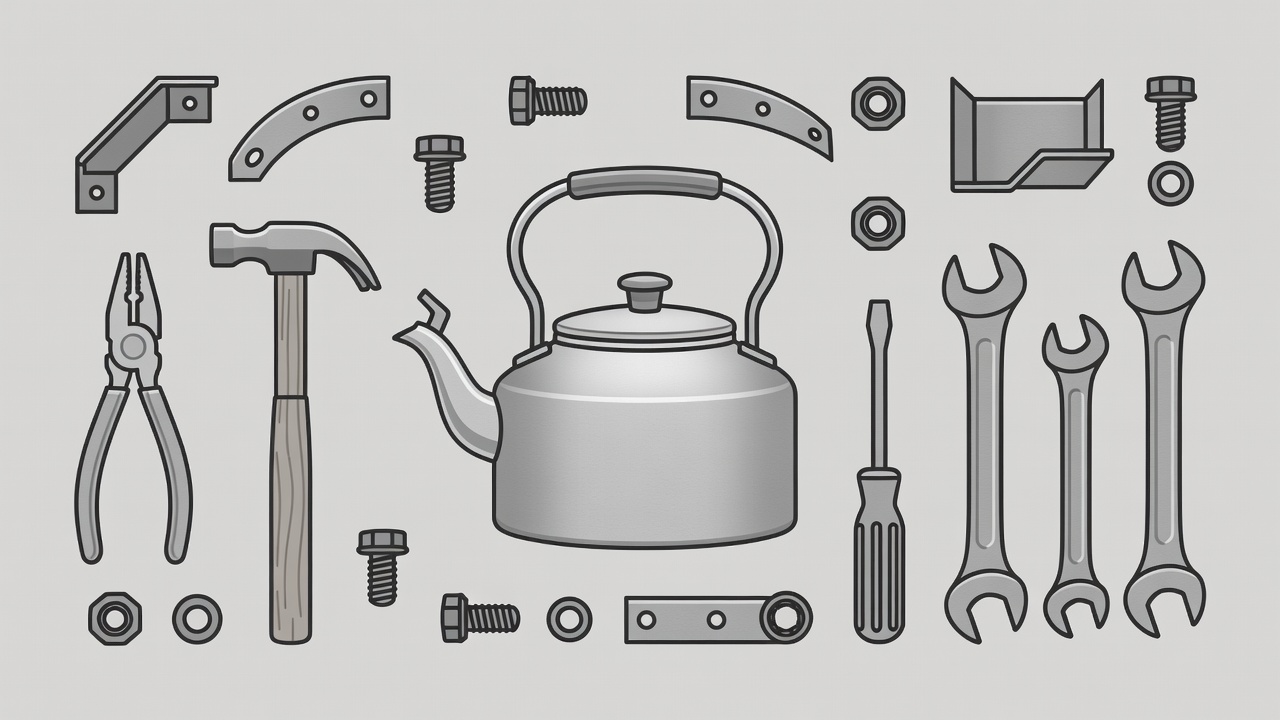
“Metal” names a broad family, not one consistent behaviour. An everyday object may use steel for a frame or fastener, aluminium for a light formed shell, copper for electrical conductors, or another alloy chosen for a combination of properties. Even within a family, composition and manufacturing treatment can change how a part performs.
A product’s design helps explain why a material was selected. A thin metal sheet can be bent into an enclosure; a bar can become a sturdy handle; a narrow wire can carry electricity or form a spring. Hardness, stiffness, mass, corrosion behaviour and heat transfer may all matter, but not always in the same way.
From stock to finished component
Metal parts may be cast, rolled, drawn, stamped, machined or forged. A maker can then weld, braze, solder, screw or rivet components together. Each method leaves its own constraints: a formed sheet needs suitable bends, while a welded structure depends on joint design and fabrication quality.
Finishes also matter. Paint, plating, anodising, polishing or other treatments can change appearance and influence surface protection. A shiny surface does not automatically mean that a whole object is corrosion-proof. Scratches, seams, contact with other materials and exposure to water or salts can affect what happens in service.
Use, wear, and care
People often notice a metal object's weight, temperature, sound and surface feel. A metal handle can feel cool before use because it exchanges heat with a hand differently from a polymer grip. A cooking vessel can distribute heat in ways that depend on its construction and heat source. A tool's balance can be as noticeable as its material name.
Follow the product's care instructions, especially for cookware, tools and coated finishes. Avoid treating all metals as interchangeable when selecting cleaners or storage conditions. If a component is loose, cracked or badly corroded, consult the product maker or a qualified repair professional instead of assuming that a surface treatment will solve a structural problem.
Comparison prompts
| Question | What to inspect |
|---|---|
| How is it formed? | Sheet, wire, cast shape, machined feature or assembled parts. |
| What contacts the surface? | Water, cleaning products, food, skin, heat or another material. |
| Can it be serviced? | Fasteners, accessible joints, replaceable handles and maker guidance. |
Compare the whole object, not just the label on one part. Continue to plastics and polymers →