One family, many behaviours
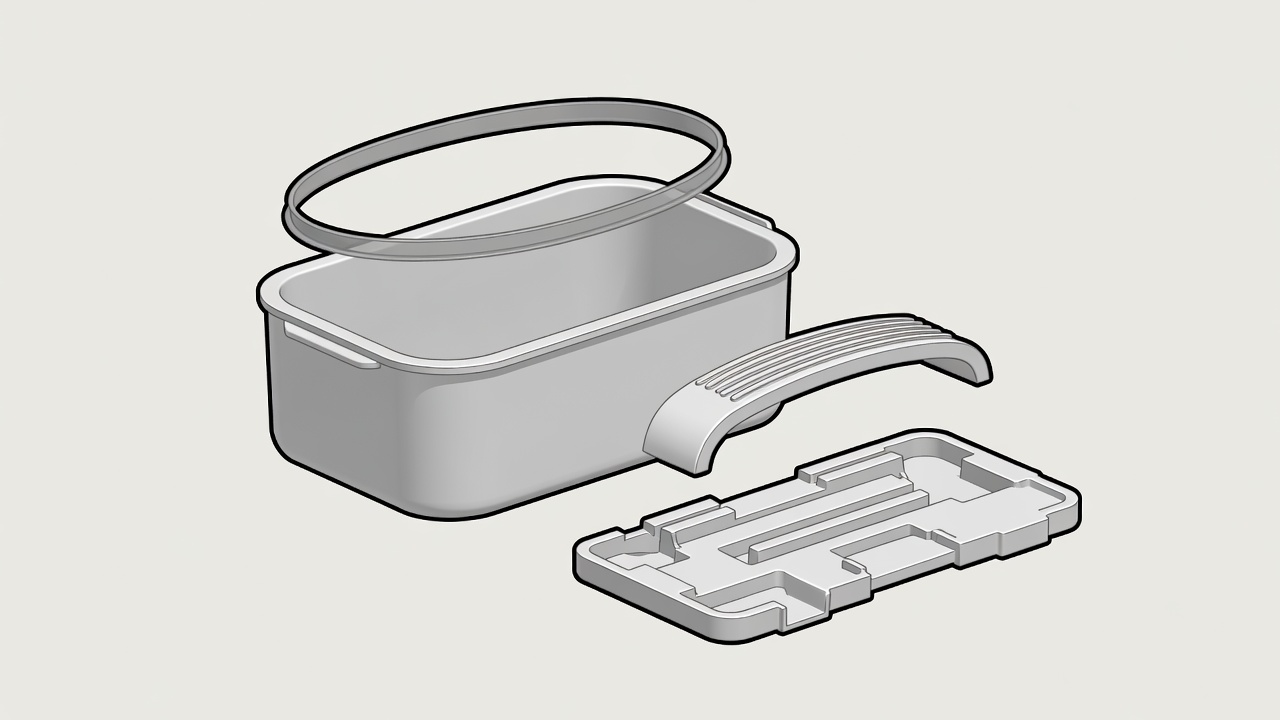
Polymers are long-chain materials whose properties vary with their chemistry, structure, additives and processing. The category includes plastics with very different degrees of rigidity, flexibility, toughness and heat response. A flexible seal and a hard storage container may both be polymer products yet solve very different problems.
Designers can select polymers for low mass, corrosion resistance, electrical insulation, comfortable grip or shapes that would be difficult to make using another process. Those features can make a part convenient and fit for its task. They do not, by themselves, tell us whether an item is well designed, durable or easy to recycle.
How shaping affects the outcome
Many polymer components are made by processes such as injection moulding, extrusion, blow moulding or thermoforming. The process influences the shapes and details a manufacturer can produce. Ribs can reinforce a thin wall; a moulded thread can remove the need for a separate fastener; a soft grip can be designed to meet a firmer core.
Coatings, pigments, fillers and multiple material layers may alter appearance and performance. Multi-part assemblies can combine useful properties, but mixed materials may complicate repair or sorting. A resin identification mark, when present, is not a guarantee that an item is accepted in every local recycling collection.
Daily experience and changing surfaces
Users may notice a polymer's weight, grip, flexibility, sound and temperature feel. Some surfaces scratch or stain more visibly than others. Sunlight, heat, cleaning agents and repeated flexing can affect products differently, so use only within the conditions given by the manufacturer.
For reusable containers, household items or tools, care instructions are a better guide than broad assumptions about a whole material family. Check whether a product is intended for food contact, heating, dishwashing or outdoor exposure rather than inferring those uses from its appearance.
Compare the actual object
- Which part needs flexibility, insulation, low mass or a moulded shape?
- Is a soft-touch layer bonded to another material?
- What limits does the manufacturer specify for temperature and cleaning?
- Are repair, replacement and local end-of-life routes clear?
Useful performance belongs to a designed part in a particular setting; it is not a blanket promise about every polymer product.